













.jpg?la=en&h=320&w=720&hash=244C75B74F0F77521D56164450973BCD)











.jpg?la=en&h=310&w=720&hash=8D9823F26AA80B2B75C3E4B2E61770DC)


.jpg?la=en&h=320&w=719&hash=13CA7E4AA3E453809B6726B561F2F4DD)
.jpg?la=en&h=306&w=720&hash=F21A7CD3C49EFBF4D41F00691D09AEAC)

.png?la=en&h=320&w=720&hash=18CFCCD916C92D922F600511FABD775D)











Reducing our operational emissions
Our scope 1 and 2 carbon reduction is driven by four key strategies:
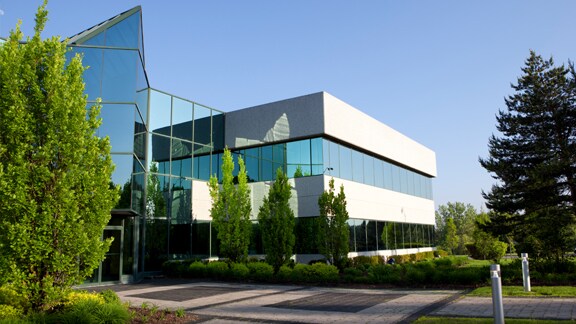
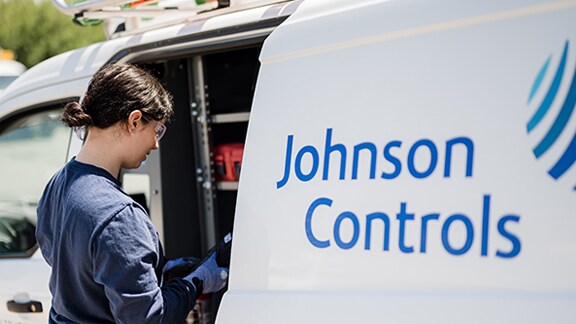
The three primary contributors of our scope 1 and 2 emissions are:
Energy usage at our global facilities, refrigerant loss in manufacturing and our global fleet. We measure emissions monthly and make continuous improvements. We also have teams dedicated to driving our carbon transition.
These teams develop strategies to achieve net zero, as well as roadmaps to ensure organizational alignment on the improvement measures, timing and required investments.

A successful strategy
We're working towards our targets from our 2017 baseline. This includes our science-based target, as approved by the Science Based Target initiative, of a 55% reduction in scope 1 & 2 emissions in 2030.
So far, we have achieved:
46%
scope 1 & 2 emissions absolute reduction
58%
sustainable revenue
33%
scope 3 reduced from the use of our products
91%
electricity met or matched by renewables
Facility decarbonization
At Johnson Controls, to decarbonize our facilities, we recognize that the best way to cut carbon and costs is to be more efficient. We prioritize efficiency and energy management, aiming to eradicate wasted energy consumption and costs. Then we look for opportunities to introduce electrification and renewable electricity. Our Climate Council develops our comprehensive plans for carbon reduction and energy efficiency to achieve our annual emissions reduction targets at our 1,000 facilities globally.


Fleet emissions reduction
Our Global Fleet Council develops carbon reduction strategies with our sustainability, commercial and procurement teams. Strategies include reducing idling, rightsizing our fleet and using fuel-efficient vehicles such as hybrid and electric cars. These strategies are then communicated and rolled out to leadership teams across the globe. The regional fleet leadership teams have annual reduction commitments as well as three-year emission reduction and investment roadmaps for the continued decarbonization of our fleet.


Refrigerant loss reduction in manufacturing
As a premier producer of chiller systems, Johnson Controls expertly manages refrigerants across multiple manufacturing sites. We minimize refrigerant loss using various innovative methods, including automated leak detection, regular measurement and reporting, minimizing losses at the point of charge and reducing waste through the cleaning and recycling of refrigerants for reuse on-site.
Johnson Controls took steps to instill both rigor and governance in the handling and use of refrigerants. A multifunctional team, with the help of a third-party engineering firm, developed a comprehensive refrigerant standard to hold ourselves accountable to sound practices and prevent accidental loss of refrigerant.


Global transition to renewable electricity
We're always working to reduce our carbon footprint and source more renewable electricity.
In 2025, 91% of the electricity we purchased globally was met or matched by renewable sources of energy. Plus, we're continuing to invest worldwide to bring renewable energy directly to our facilities, including new partnerships with Mexico’s Federal Electricity Commission, on-site generation and increased renewable sourcing in Europe.
100% of our US electricity use is met or matched by renewable electricity. Alongside on-site renewables, we also purchase certified Green-e Energy renewable energy certificates (RECs) to match 100% of the greenhouse gas emissions tied to our remaining US electricity use across offices, manufacturing sites, R&D and branch locations.
But it doesn't stop there. Were dedicated to helping our customers achieve their renewable energy goals, too. Our renewable energy solutions give organizations feasible, cost-effective ways to cut energy costs and shrink their environmental impact.
Learn more in our 2026 Sustainability Report.

Our commitment to nature
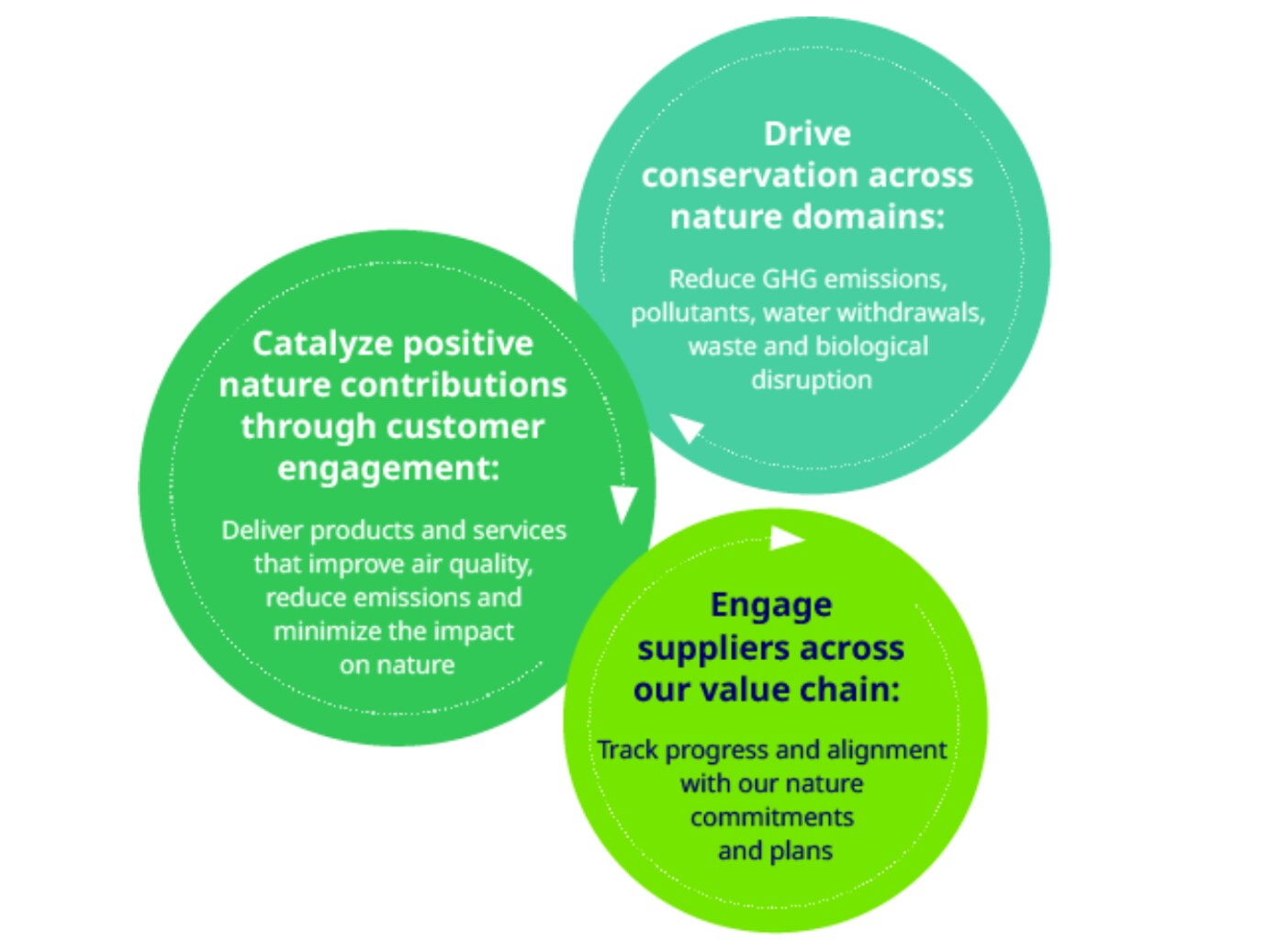
We understand and assess nature-related risks and opportunities to mitigate our impact. We have established cross-functional workstreams to focus on the following:
Drive conservation across nature domains:
Reduce GHG emissions, pollutants, water withdrawals, waste and biological disruption.
Catalyze positive nature contributions through customer engagement:
Deliver products and solutions that improve air quality, reduce emissions and minimize the impact on nature.
Engage suppliers across our value chain:
Track progress and alignment with our nature commitments and plans through tools like EcoVadis.
Our focus on nature includes upstream, direct and downstream impacts and opportunities from:

|

|

|
|
Climate change: Greenhouse gas emissions |
Pollution: Land, air, and soil |
Waste: Hazardous and non-hazardous |

|

|
|
Water: Conservation and wastewater management |
Biodiversity and ecosystem use change: Terrestrial and aquatic |
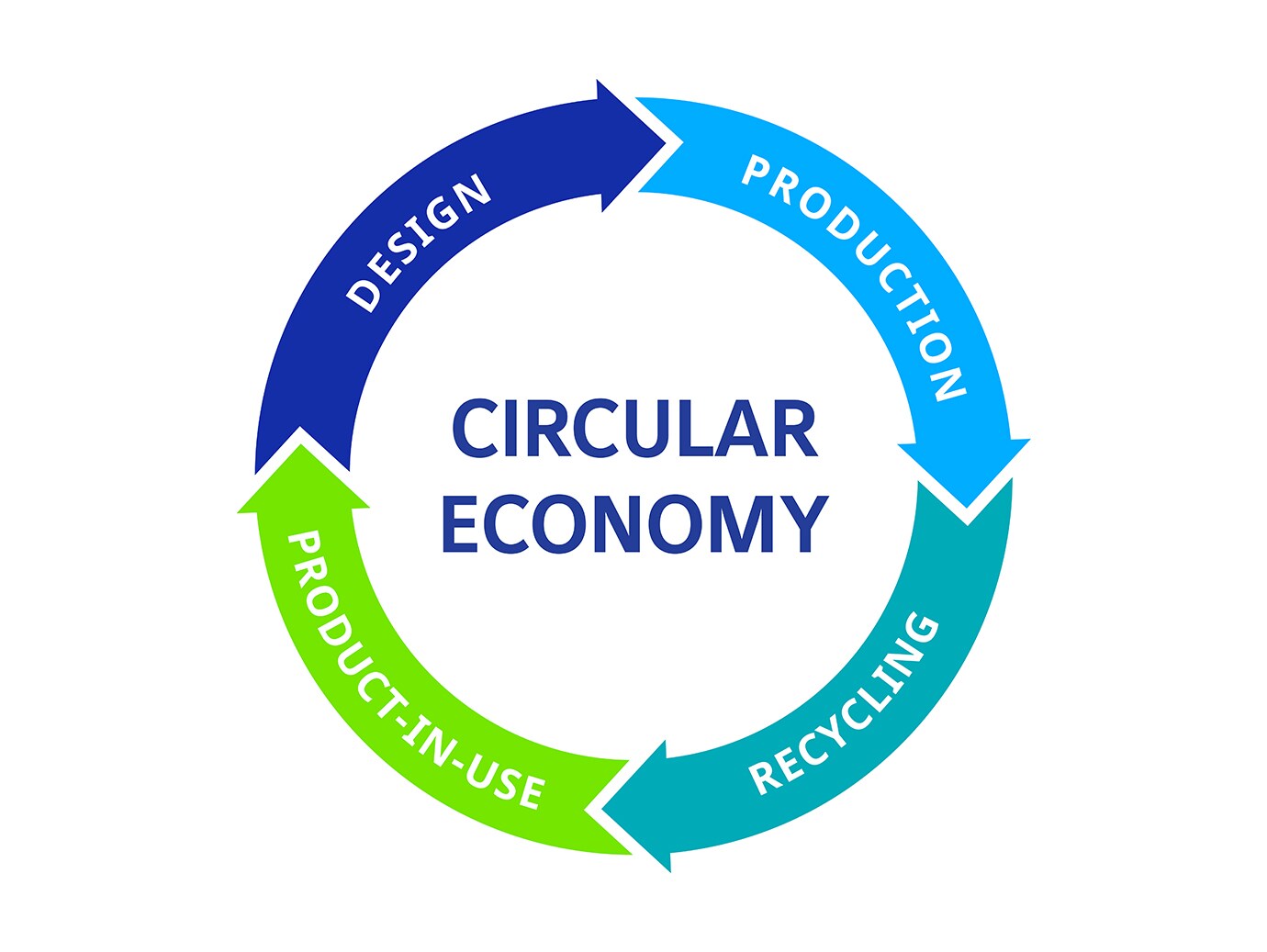
Waste and circular economy
In 2025, 14 of our manufacturing locations – representing 27% of our global manufacturing sites – achieved Zero Landfill status, each attaining a 100% landfill diversion rate and exceeding our goal of 25% of global manufacturing sites landfill free in 2025.
These sites successfully diverted all waste generated through documented reuse, recycling, composting and incineration with energy recovery, while excluding any disposal through landfill or incineration without energy recovery. All locations are encouraged to further increase the reuse and recycling of materials and strengthen waste‑reduction practices across operations.
Our water use
